Cook
Life of PiCook is the French cook aboard the Tsimtsum and, in Pi Patel’s human account of the lifeboat ordeal, the most immediate source of danger to the survivors. He exploits the Taiwanese sailor’s vulnerability, kills Pi’s mother, and is eventually killed by Pi. His place in the story is also shaped by the contrast between Pi’s two accounts: the Cook’s actions in the human version correspond to those of the hyena in the animal version, while the tiger’s killing of the hyena parallels Pi’s killing of Cook.
Identity and Narrative Position
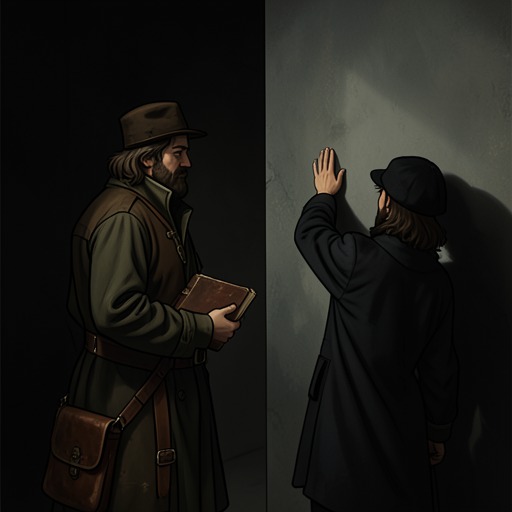
Cook is identified during the later investigation as a Frenchman who worked aboard the Tsimtsum. That detail connects him to the French-speaking castaway encountered during Pi’s blindness, but the connection remains uncertain within the conversation: Pi says he never saw the man because he was blind, and only suggests that the Frenchman might have been the cook. The investigators treat the possibility as convenient, while Pi cannot confirm it from firsthand sight. Cook therefore has a clear role in the human account without every detail of his identity being independently verified.
The uncertainty is prepared by Pi’s earlier confusion over a French accent. He reasons that Richard Parker was born in Bangladesh and raised in Tamil Nadu, making the apparent accent incongruous, and dismisses the notion that the zoo animals could have learned French in Pondicherry. Emerging from a confused, exhausted state, Pi hears another voice and realizes it is not an animal speaking. In retrospect, that episode belongs to the blind-castaway sequence, which the investigation later considers alongside the claim that the Frenchman was the Cook. The accent is thus a small but telling point where the two accounts and the problem of identifying their characters meet.
Actions Aboard the Lifeboat
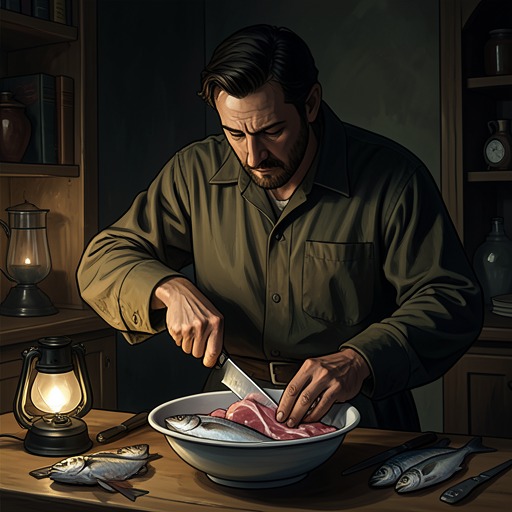
In Pi’s human account, the Cook takes advantage of the Taiwanese sailor, who is gravely weakened after the shipwreck. The sailor dies, and the Cook turns his remains into bait and provisions. Pi’s mother protests his treatment of the dead man and appeals to his humanity and decency; the Cook responds with vulgarity and continues. His conduct makes him more than a competitor for scarce food: he is willing to impose his will on the other survivors and disregard their objections.
The Cook’s violence escalates when he kills Pi’s mother. Pi’s account places this act at the point when the survivors’ already desperate situation becomes intolerable. Afterward, Pi spends the rest of the day and night on the raft, watching the Cook without speaking. The Cook could have cut the raft loose but does not. In the morning Pi returns to the lifeboat, weak and silent. The Cook gives him turtle blood and food, a brief act of provision that does not undo the preceding violence or restore trust between them.
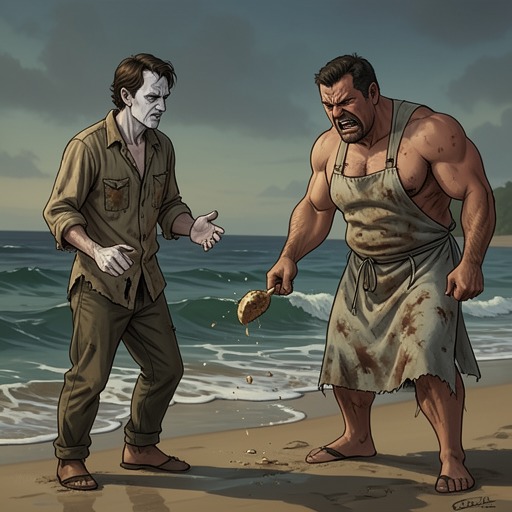
Their final confrontation follows. Pi says they fight and that he kills the Cook with a knife that had been left in plain view on the bench. The Cook does not express remorse or offer last words. Pi describes the killing as a struggle, then acknowledges that he continues stabbing after the Cook has fallen. He also says he eats parts of the body, driven by extreme need, and uses flesh as bait. He stops eating it once he catches a fish and says he prays for the Cook’s soul. These details present survival not as a clean victory but as an ordeal that leaves Pi with acts he confesses and continues to reckon with.
Relationships and Conflict
The Cook’s relations with the other survivors are defined by unequal power and deteriorating trust. The Taiwanese sailor is his victim; Pi’s mother openly opposes him; and Pi moves from fear and helplessness to lethal resistance. The Cook’s temporary provision of food to Pi occurs after Pi has returned from the raft, but it does not alter the fundamental conflict between them. Pi remains exposed to the Cook’s conduct, and the knife on the bench becomes the instrument through which that imbalance is reversed.
The animal account gives this conflict a second form. When the Japanese investigators compare the stories, Pi confirms the correspondence between the Taiwanese sailor and the zebra, his mother and the orangutan, and the Cook and the hyena. The tiger in that version represents Pi: the tiger kills the hyena just as Pi kills the Cook. This parallel does not erase the human acts or turn them into a simple allegory. Instead, it lets the same sequence be told through different figures, changing how the violence is seen while preserving its essential pattern of victimization, resistance, and survival.
Change and Significance
Cook’s decisive effect on Pi is bound to the transformation of survival into participation in violence. Pi is not merely rescued from danger by another creature: in the human account, he kills the person who has killed his mother, then survives through food and bait taken from the dead. His account presents this as the consequence of extremity, not as an act he can comfortably set aside. The daily prayer for Cook’s soul sits beside Pi’s admission of what he did, holding necessity and moral unease together.
As a character, Cook is therefore both an antagonist in the lifeboat narrative and a key to reading its two versions. The human account identifies the Cook as the killer of the Taiwanese sailor and Pi’s mother, and Pi as the person who kills him. The animal account redistributes those roles among the zebra, orangutan, hyena, and tiger. The correspondence gives the final comparison its force: the tiger’s victory is not simply Richard Parker’s act, but a transformed telling of Pi’s own confrontation with the Cook.